Annual Conferences
GWZO Annual Conferences
Alongside the Oskar-Halecki-Lectures, the GWZO Annual Conferences are among the institute's most pominent events of the year. They address cross-project questions and explore key research desiderata in the study of Central and Eastern Europe. Scholars from the GWZO and invited guests present their work to a specialist audience under an overarching theme and subsequently discuss their research approahces with the assembled group of experts.

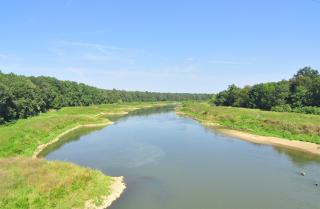
2026 | Fluid boundaries. Water bodies and their use in the history and culture of Eastern Central Europe
Water bodies shape landscapes, influence settlement patterns, and facilitate trade. Reflecting on the scholarly work of Matthias Hardt, this conference explores their significance for Eastern Central Europe from the premodern period to the present through the lenses of development, demarcation, and exchange. Hydraulic engineering projects opened up natural environments, while land reclamation and drainage enabled agricultural use and the establishment of settlements. At the same time, waterways connected cities, markets, and societies, fostering the circulation of goods, people, and knowledge. Rivers such as the Vistula, Oder, and Danube became important corridors of transregional interaction. Yet bodies of water also served as lines of division and borders. Their role as lifelines, connecting links, and boundary spaces makes them a particularly fruitful subject for historical and cultural research on East Central Europe.
2025 | On Non-Knowledge: Thirty Years of Research on Eastern Europe
In 2025, the Leibniz Institute for the History and Culture of Eastern Europe (GWZO) celebrates its thirtieth anniversary. Founded as the Humanities Centre for the History and Culture of East Central Europe, its researchers have made significant contributions over the past decades to advancing knowledge about this region.
We would like to celebrate our research and outreach achievements together with you by turning our focus both self-reflexively and analytically to the question of non-knowledge. The conference focuses on the institutions, actors and practices involved in the construction of knowledge. What do societies in Eastern Europe seek to know about themselves? What kinds of knowledge are destroyed, forgotten, overwritten or subverted in different historical periods? On the occasion of this anniversary conference, we are pleased to welcome long-standing cooperation partners as well as former and current members of staff. In addition, Maren Röger and Julia Herzberg, representing the third generation of the institute’s leadership since its founding in 1995, will deliver their inaugural lectures.

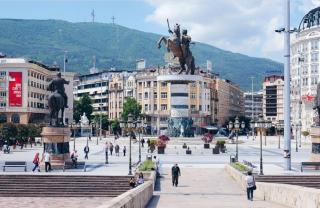
2024 | Myths of the Past in Service of the Present. Resurgent Conceptions of National Origins in Central, Eastern and Southeastern Europe
Since the 19th century, nation-building processes have been accompanied by imaginations of supposedly distinctive, deeply rooted and historically stable concepts of ethnicity. This applies not only, but especially, to Central, Eastern and Southeastern Europe, with its rich history of national and territorial transformations. Concepts of ethnic, respectively national identity were grounded in sometimes exotic theories of origin and persistence that oscillated between academic scholarship and myth-making.
The GWZO annual conference 2024 explores the appropriations and modifications of myths of the past with particular reference to current revivals, while at the same time taking a historical perspective. It draws on the broad spectrum of disciplines represented at the GWZO – from history and archaeology to art and architectural history, ethnology and literature – to gain a multifaceted understanding based on interdisciplinary research.
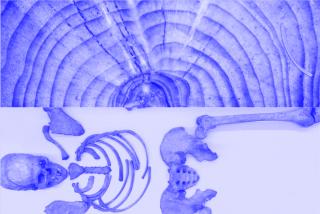
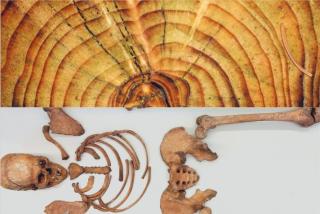
2023 | Separate Yet Interdependent: Humanities and Natural Sciences in Dialogue
The conference focuses on the causes and consequences of selected collaborations between disciplines in the humanities and the natural sciences. Ongoing research projects will be presented and situated, from the perspective of the history of science, within broader developments in cultural and natural history. Four thematic panels are devoted to collaborative research on the archaeology, history and culture of Central and Eastern Europe. Reports from the work of interdisciplinary teams illustrate how research questions of mutual relevance are jointly developed and addressed.
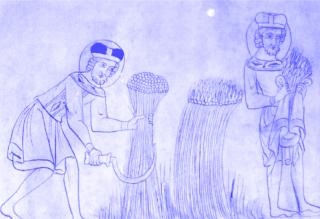

2022 | Materials, Goods, Commodities: On the Entangled History of Eastern Europe
Materials shape societies. Their extraction, production, circulation and use determine the distribution of resources; as goods and commodities, they are traded worldwide. To this day, this has influenced the settlement patterns and interconnectedness of villages and cities. Processing and consumption have given rise to infrastructures and institutions. Raw materials such as cotton, silver and zinc, fossil energy sources such as coal, oil and gas, as well as foodstuffs such as grain, coffee and sugar therefore offer important perspectives on the transformation of working and living environments, as well as on the underlying relations of power.


2021 | Asymmetries of a Region: Decentring Comparative Perspectives on Eastern Europe
Comparison is among the most frequently used approaches in humanities and social sciences. In recent decades, comparative approaches have been
subjected to continuous methodological debates. In particular in a global context, research has sought to integrate comparative methods with research on
transfer, connection, and entanglement. At the same time, researchers have started paying more attention to social, economic, cultural and other inequal-
ities. This has also prompted the question of how comparative analysis in area studies may consider apparent asymmetries without equalising or reifying.
The GWZO Annual Conference 2021 makes the social, cultural and economic margins the focus of comparative analysis. By decentring comparative perspectives, this interdisciplinary conference seeks to discuss new directions in comparative research on and with Eastern Europe. The presentations con-
nect to current efforts in global and area studies to integrate multiple perspectives, consider dynamic frameworks, and highlight spatial overlaps of actors, objects and ideas. This can contrast, complement, conflict with or undermine the more widely known accounts that have been disseminated from the centre.

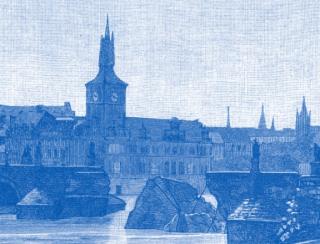
2019 | Humans – Environment – Disaster: Perception and Historical Impact in Eastern Europe from Late Antiquity to the Present
Like all regions of the world, Eastern Europe is affected by natural disasters, both in the present and in historical times. However, natural extreme events have been less formative for the self-image and external perception of Eastern European inhabitants than, for example, in Japan or the Philippines. Consequently, natural disasters have so far rarely been understood as constitutive of the character of the large region between the Elbe and the Ural, and between the Baltic, Adriatic and Black Seas. The GWZO annual conference in 2019 therefore focuses explicitly on the history of events, perceptions and impacts of natural disasters in the institute’s broadly defined research region.
The starting point is the basic assumption of disaster history that natural extreme events cannot be considered disasters without a social context—without humans, there is no ‘natural’ disaster. The GWZO annual conference seeks to address this approach through case studies of different categories of extreme events from Late Antiquity through all historical periods, examining their effects on the subregions of Eastern Europe.

2018 | Joint Annual Conference of GWZO and EEGA (Leibniz ScienceCampus “Eastern Europe – Global Area”): Eastern Europe in Global Contexts
Since the Middle Ages at the latest, the societies and states of Eastern Europe have been integrated into large-scale interactions through trade and migration. These global connections intensified from the mid-19th century onwards during the first wave of globalisation. They underwent major transformations both during the era of the global Cold War and in the subsequent period of transformation. Today, these diverse transregional entanglements take place in the context of an emerging multipolar world order and are shaped by digitalisation and accelerated communication. Like societies in other parts of the world, those of Eastern Europe face the dual challenge of positioning themselves within these entanglements and the opportunities and demands they bring, while simultaneously being repositioned by them.
The joint annual conference of GWZO and EEGA addresses this dual challenge through a transdisciplinary and thematically and chronologically broad approach. The critical engagement with Eastern Europe as a Global Area is inspired by the pursuit of a more differentiated understanding of current developments in the region, which are examined not in isolation but in relation to other parts of the world.

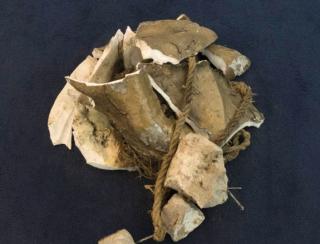
2017 | Ostfaktisch: Production, Appropriation, Manipulation – Histories in the Focus of Politics, Scholarship and the Arts
Historical scholarship has not only recently asked about the “uses of the past” while the “abuses of the past” have long been a focus of research when it comes to memory politics, representations and discursive logics. However, the question of how history is made and employed is currently taking on new urgency. Increasingly, we encounter the deliberate distortion of history – often consciously instrumentalised and directed from above, by political authorities and governments in both East and West. In this process, the critical scholarly investigation of historical events and their contexts is called into question.
The GWZO annual conference, committed to disseminating in-depth knowledge of historical events, will therefore examine case studies that demonstrate the broad spectrum of historical interpretation in public discourse today and in historical comparison. Attention will also be paid to the roles and possibilities available to scholarship and the arts in these processes.

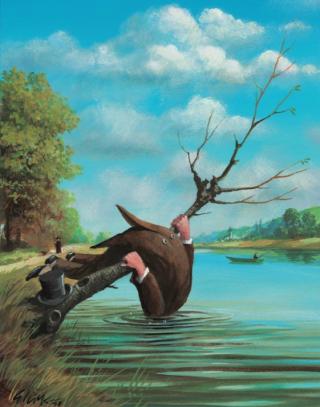
2016 | East-Central Europe Fluvial – In the Flow, Across the Flow, and With the Flow
Rivers are part of everyday life – not only through visual perception, but in all forms of expression available to humans. The interplay of land and water, of stability and movement, symbolises the power of nature and produces continual flowing change, a process that has earned rivers the metaphorical designation of “lifeblood”. Rivers also open up spaces and shape regions. Settlement movements and trade routes, military campaigns and epidemics, ideas and innovations follow their course. Political power centres and ecclesiastical hubs often concentrate along their banks. At the same time, rivers divide, interrupt, demarcate and mark ownership and territories. Their often unpredictable forces can also bring trade, transport and communication to a halt.
Rivers are therefore both moat and bridge, line of connection and boundary. It is in this ambivalence of connecting and separating, providing and withdrawing, creating and destroying, that much of their mythic potential and their manifold artistic and literary representations lies. Furthermore, rivers contribute to the construction of historiographical spaces and the organisation of bodies of knowledge. These diverse aspects are particularly relevant for East-Central Europe, a region profoundly shaped by both major rivers and smaller waterways. The annual conference will explore these themes within the spectrum of GWZO research, employing a proven interdisciplinary approach and a chronological perspective spanning from the Early Middle Ages to the present.


2015 | Leipzig and Eastern Europe: Chapters of a Relationship over 1,000 Years
Over the course of its thousand-year history, Leipzig has maintained a variety of relationships with Eastern Europe. Its first recorded mention is linked to the event in which the Bishop of Meissen, Eid, died in Leipzig on 20 December 1015 while returning from a diplomatic journey to the Polish ruler Bolesław Chrobry. Leipzig’s advantageous location at the intersection of several long-distance routes allowed it to develop into a market and fair town, where, among other goods, numerous East Central and Eastern European as well as Asian products were traded.
At the same time, ideas and knowledge circulated through Leipzig: science, art, architecture and music flourished in the city, supported by its extensive connections with Eastern Europe. The aim of the 2015 GWZO annual conference is to illustrate these influences through selected chapters from 1,000 years of Leipzig’s history and culture.


2014 | On the Threshold of a New Era? Lothar III (1125–1137) and Bolesław III (1102–1138) in Their European Contexts
The Fourth German-Polish Medievalists’ Meeting in Leipzig, which also serves as the GWZO annual conference, places two rulers of the 12th century at the centre of attention, whose lifespans largely coincide and whose activities repeatedly intersect. Their reigns did not form a direct continuity, as Lothar died without a son and the royal dignity in the Empire passed to the Staufer, while Bolesław’s testament initiated a period of dynastic partition and regionalisation in Poland. Both therefore emerge as key figures of a transitional phase, and the conference raises the question of the transitional character of other levels of political, social, cultural and economic life in their time.
2013 | The Year 1813, East-Central Europe and Leipzig: The Battle of the Nations as a (Trans)National Site of Memory
2012 | History in Panorama: Forms and Functions of Panoramic Images in Eastern Europe
2011 | Armenians in the Economy, Culture and Politics of Eastern Europe (1000–1900)
2010 | Between Confrontation and Integration: East-Central European Aspects of the Mass Phenomenon of Football
2009 | In, With and About East-Central Europe 1989–2009: Findings, Gaps and Perspectives of Historical and Cultural Studies
2008 | East-Central Europe and the Steppe
2007 | “Travelling Concepts”: Ways of Thinking and Their (Political) Translations in the 20th Century
2006 | Fifty Years On: 1956 in East-Central Europe
2005 | International Conference on the Occasion of the Tenth Anniversary of GWZO: East-Central Europe as a Region of Historical Construction
2004 | Past Grandeur and Powerlessness in East-Central Europe: Representation of Imperial Experience in Historiography Since 1918
2003 | East-Central Europe in East-West Trade: Economic History of East-Central Europe in the Middle Ages and Early Modern Period