Research of the Directorate
Within the Directorate and its two Divisions »Transfer and Publishing« und »Library and Digital Services«, research projects are conducted and third-party funding is acquired by the Directors, Professor Maren Röger, the Deputy Director, Professor Julia Herzberg and the academic staff based in these units. Current projects include studies on cultures of entertainment and visual history in multiethnic cities, as well as research on the »invention« of the Kyivan ecclesiastical historiographical, hagiographical and polemical tradition since the late sixteenth century. Most research projects are affiliated with one of the GWZO's research departments. In addition, the Directorate division »Transfer and Publishing« is home to the art-historical research project »Movement – Encounter – Conflict«, which is being developed in cooperation with the Dresden State Art Collections and is funded by the Free State of Saxony. Research on Armenians in Central and Eastern Europe also forms part of the Directorate's activities.


English-language edited volume »Gendered Violence in War and the Structures of Silencing. Comparative Perspectives on Asia and Central and Eastern Europe after the Second World War«
Together with her colleague Joohee Kim, Assistant Professor of Women’s Studies at Duksung Women’s University, Seoul, South Korea, Maren Röger is editing a volume that offers comparative perspectives on gender-based violence in wartime in the »Global Easts«. In both regions, the Second World War was waged with enormous brutality, and in both regions, there were sexualized forms of violence. The book provides an overview of the existing historiography on this topic for a global English-speaking audience and presents newer, more specific case studies from this field of research.
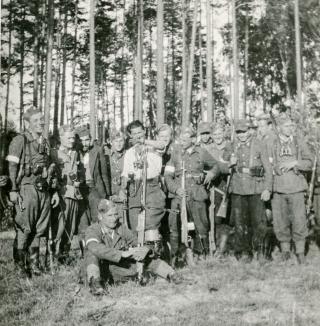
»My Polish Diary«: An Edition Project on the Memoirs of an Austrian Gendarme in Nazi-Occupied Poland
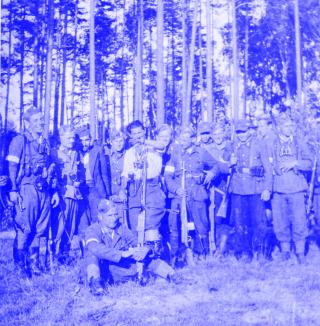
The memoirs of the former Austrian gendarme Adolf Landl depict the brutal everyday reality of occupation in Poland from the perspective of a direct participant. This collaborative project with the Vienna Wiesenthal Institute for Holocaust Studies (VWI) and the Documentation Archive of the Austrian Resistance (DÖW) will produce a critical scholarly edition of his memoirs.


Femicide: The History of Violence against Women in Europe
Maren Röger’s research project examines the history of violence against women in Europe in the long twentieth century. It highlights the complex interactions between private and public spaces and between social norms and legislative practice.
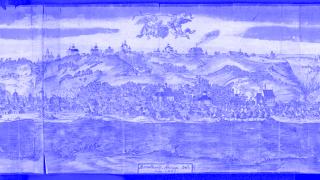
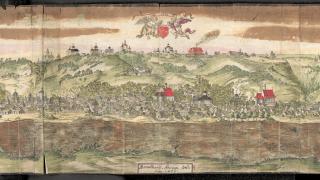
The Invention of Tradition: Kyiv’s Ecclesiastical Tradition (1596–1720)
At the end of the sixteenth century, a process of the »invention« of Kyiv’s historiographical, hagiographical and polemical tradition began. It was regarded as a return to »ancient times« and to original sources, and continued throughout the entire seventeenth century.
The project is based in the GWZO department »Culture and Imagination«, within the thematic field »Heritage and Canon«, and is funded by the German Research Foundation (DFG).
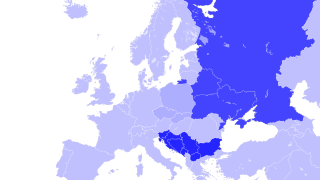
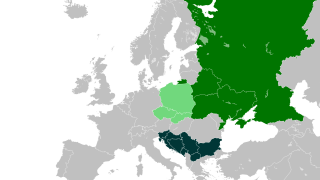
Premodern East Slavic Europe Network
The new network aims to pool expertise on the premodern period in Eastern European history in order to strengthen this field of research and increase its visibility. Its goal is to broaden the focus of early modern studies by integrating the history of the region into the transnational (or transimperial) and transcultural history of Europe and Eurasia.

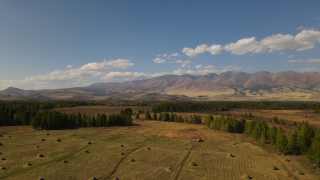
Melting Mountains: Environment, Society and Vertical Climate Frontier in the Greater Altai (1950–2020)
The project focuses on the climate history of the Greater Altai Highlands and aims to rethink the impact of climate change on populations living at the periphery through the concept of the »vertical climate frontier«. This term refers to the climate-driven advance of state power and colonial practices into highland regions.
The research has been funded since 2024 by the Leibniz Association within the framework of the Leibniz Programme for Women Professors and is carried out by Andrei Vinogradov under the direction of Julia Herzberg. At the GWZO, the project is conducted within the »Humans and Environment« Department.
Further Research Projects within the Directorate

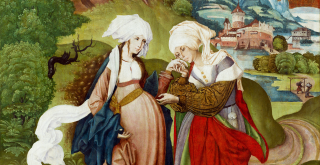
Movement – Encounter – Conflict
The project, funded by the Saxon State Ministry for Science, Culture and Tourism, will examine the art history of Central and Eastern Europe in the premodern period in order to make the shared cultural history and its complex developments visible through selected objects. The focus is on the broader region between the Baltic, the Black Sea and Southeastern Europe from 1300 to 1570, when key cultural reference points emerged, as well as the tensions that would shape the entire modern era. The associated partner is the Dresden State Art Collections (SKD).