Topic
Gender-based violence during in Belgium and the »Protectorate of Bohemia-Moravia«
This project examines discourses recorded in diaries and judicial records produced during the Second World War in Belgium and the »Protectorate of Bohemia and Moravia«. The aim is to explore how gender-based violence was experienced, perceived and narrated at the time of German occupation.
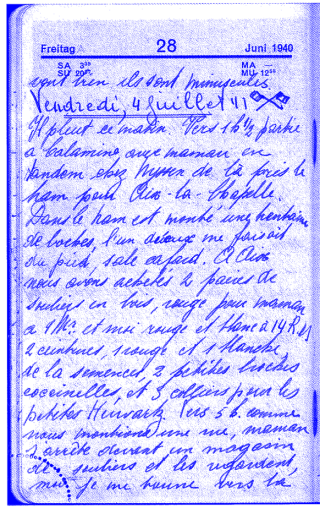
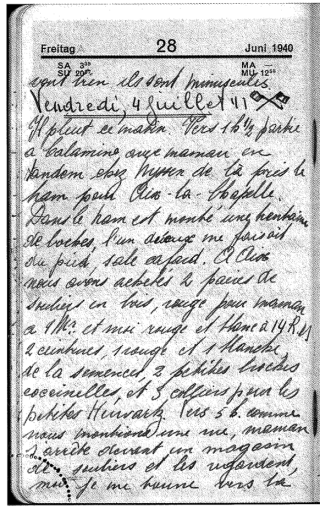
Gender-based violence during Second World War in Belgium and the »Protectorate of Bohemia-Moravia« (1939-1946)
How was gendered violence experienced, perceived and narrated during the Second World War? This project investigates gendered violence in Belgium and the Protectorate of Bohemia and Moravia between 1939 and 1946 from a comparative perspective. While existing scholarship has primarily focused on sexual violence or intimate relationships between civilians and soldiers, this project adopts a broader understanding of gendered violence as a continuum ranging from everyday harassment and symbolic violence to sexual assault and other forms of physical violence. It asks how such violence was shaped by military occupation, liberation and shifting ethnic and political hierarchies, and how contemporaries interpreted and responded to these experiences.
The project combines personal diaries and judicial records to examine both the practices of violence and the ways in which they were documented, narrated and remembered. Rather than treating testimonies solely as evidence of violent events, it analyses them as historically situated narratives shaped by their social, cultural and legal contexts of production. Particular attention is paid to the perceptions of victims, perpetrators and witnesses, as well as to the language through which violence was described, justified or silenced.
By comparing two occupied societies that experienced different forms and intensities of wartime violence, the project seeks to identify both shared patterns and context-specific dynamics. It adopts a microhistorical approach and draws on a wide range of archival collections across Belgium, the Czech Republic and Germany. By combining gender history, the history of violence and diary studies, the project contributes to a better understanding of the relationship between everyday experiences, gendered norms and wartime violence in twentieth-century Europe.