GWZO Annual Lecture »East to East« 2026-27
GWZO Annual Lecture 2026/27
East to East – Connecting Eastern Europe and East Asia
Since the intensification of Chinese-Russian cooperation in the wake of Russia’s war of aggression against Ukraine, cooperation between regions commonly referred to as the »East« has increasingly become a focus of Western debates about a changing world order. In cooperation with Leipzig University (ReCentGlobe, Department of East Asian Studies), the GWZO lecture series explores historical entanglements between Eastern Europe and East Asia from economic, intellectual, and scientific-historical perspectives, looking beyond Sino-Soviet/Russian relations.
The opening and closing panel discussions address the question of whether current shifts should be understood as deglobalisation and the emergence of new blocs, or rather as a new phase of transregional exchange under changed conditions.
All the events in this year’s annual lecture series will be held in English.
The lecture series will be held in a hybrid format. Please follow the link to attend online: Register here
Start: 21 Oktober 2026, 5 p.m. at GWZO
Detailed Programme
21 October 2026, 5 p.m., GWZO, Reichsstraße 4-6, 4th Floor
Kickoff–Roundtable
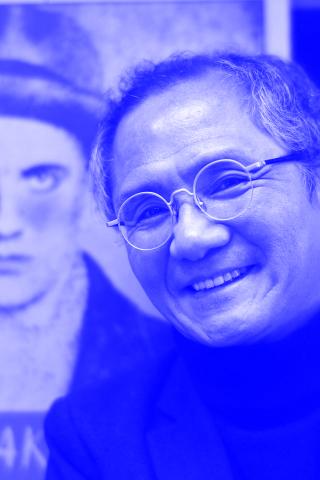
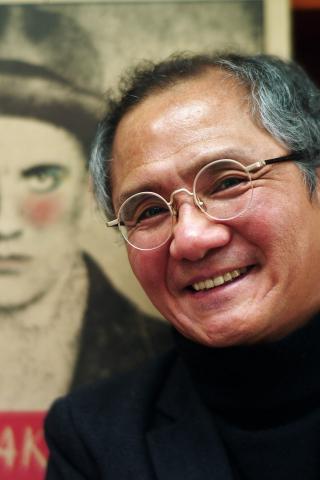
Prof. Dr. Frank Hadler (GWZO), Prof. Dr. Nadin Heé (Leipzig University, Department of East Asian Studies/ReCentGlobe), Prof. Dr. Elisabeth Kaske (Leipzig University, Department of East Asian Studies) und Prof. Dr. Jie-Hyun Lim (Sogang University, Critical Global Studies Institute) in conversation.
With a Lecture from Prof. Dr. Jie-Hyun Lim: Positivist versus Imaginative East: Displacing East and West in the Global Easts
By radically juxtaposing historical self-imageries in Eastern Europe and East Asia, this lecture rescues »Global Easts« from the geopositivistic Eurocentrism. »Global Easts« evokes a hinge, not a margin, to disrupt the complacent binary of East and West.
4 November 2026, 5 p.m., GWZO, Reichsstraße 4-6, 4th Floor
Multiple Configurations of Eastern Transimperialities: Crossroads Asia, Transottomanica and Meta Area Studies
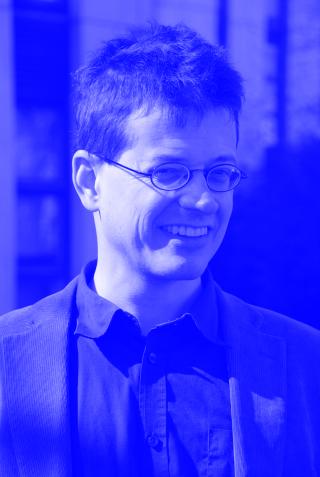
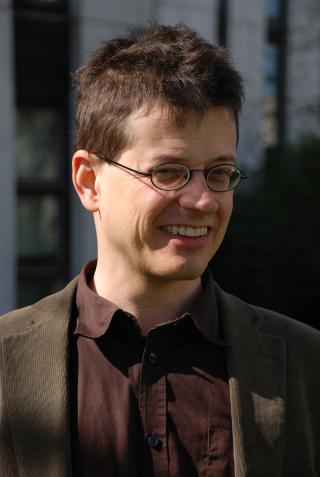
Prof. Dr. Stefan Rohdewald (Leipzig University, History Department)
This contribution provides insight into some aspects of the discussion surrounding the development of spatial concepts that go beyond the notion of container spaces. As the context of this series of lectures encompasses the whole of Asia and a large part of Europe, the challenge lies in evaluating approaches or metaphors that are suitable both for mesohistorical spatial configurations and for interconnections spanning very great distances and several historical periods.
(Moderation: Prof. Dr. Elisabeth Kaske, Leipzig University)
25 November 2026, 5 p.m., GWZO, Reichsstraße 4-6, 4th Floor
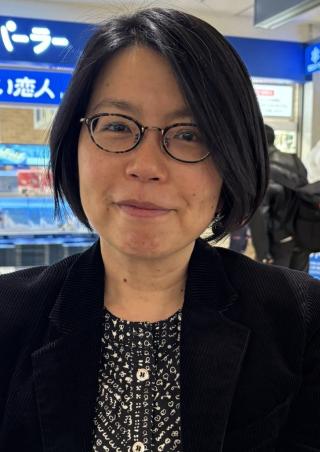
How Changes to the Russian and Soviet Borders in Eastern Europe from a Japanese Perspective Belong to Global Affairs
Prof. Dr. Yoko Aoshima (Hokkaido University, Slavic-Eurasian Research Center)
First, this lecture provides an overview of Japanese scholarly interest in Russia/the Soviet Union and Eastern Europe. Then it examines interpretations of the onset and conclusion of the Second World War in both Eastern Europe and the Far East. Specifically, it analyzes the differences and connections between these two interpretations regarding border changes. Furthermore, it considers how these historical understandings in Japanese Academia relate to Japan's perspective on the post-war world order.
(Moderation: Prof. Dr. Nadin Heé, Leipzig University)
9 Dezember 2026, 5 p.m., GWZO, Reichsstraße 4-6, 4th Floor
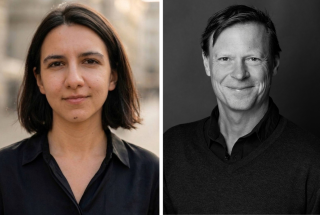
The Economy of the Sino-Soviet Alliance and its Afterlives
Dr. Karina Khasnulina (GWZO) and Dr. Jan Zofka (GWZO)
The Sino-Soviet alliance of the 1950s transformed not only the industrial landscape of the young People's Republic but also redistributed global flows of technology and expertise. This lecture traces the alliance from the concrete and steel of its founding to its long and uneven afterlife, ending with the memory of that alliance in contemporary China.
(Moderation: Dr. Uwe Müller, GWZO)
6 January 2027, 5 p.m., GWZO, Reichsstraße 4-6, 4th Floor
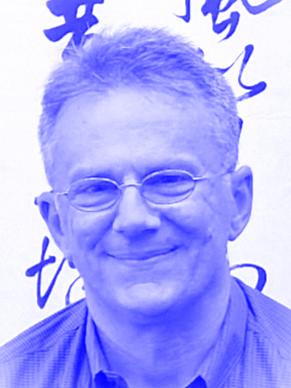
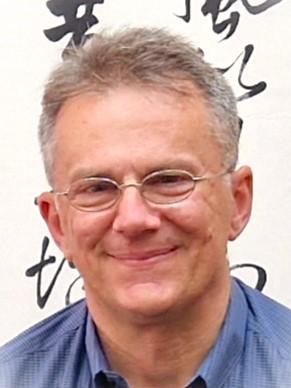
The Two Traditions of China Studies in Hungary
Dr. Péter Vámos (ELTE Research Centre for the Humanities, Institute of History)
The lecture reviews the past century of Hungarian sinology and modern China studies from a global, structural, and historical perspective. It examines the development from the Hungarian origins of Orientalism — of which sinology formed a part and which took Eurocentrism as a self-evident premise — to the present state of modern China studies in Hungary.
(Moderation: Dr. Jan Zofka, GWZO)
20. January 2027, 5 p.m., GWZO, Reichsstraße 4-6, 4th Floor
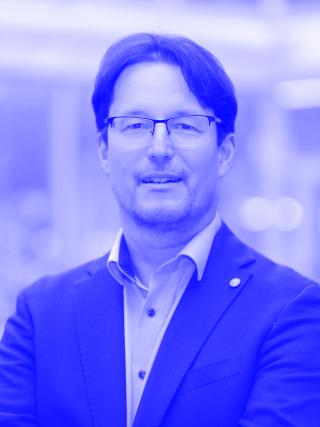
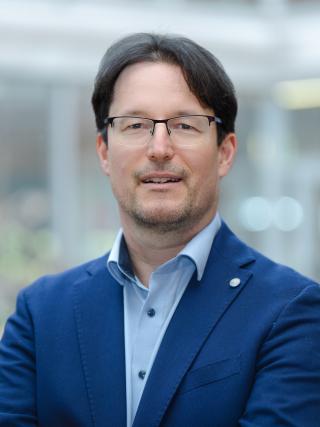
Economic Reforms in Eastern Europe and early »Reform and Opening« in China (1978-1989): A Transnational History of Intellectual Exchanges
Prof. Dr. Felix Wemheuer (University of Cologne, Institute of East Asian Studies)
Following Mao Zedong's passing, Chinese policymakers and economists embarked on intense debates regarding the overhaul of the country’s centralized planned economy. In this process, Eastern Europe's economic reforms served as a significant reference point: Chinese delegations were dispatched to Yugoslavia and Hungary to dissect both the successes and failures of economic policies, while Eastern European economists were welcomed to China, engaging in discussions with party officials and leading economists – their insights transcending academic boundaries. With a focus on the transnational intellectual history through historical documents and academic journals, this talk probeS why Eastern Europe's economic reforms failed to avert socialism's collapse, while China's »Reform and Opening« policies thrived.
(Moderation: Dr. Karina Khasnulina, GWZO)
3 February 2027, 5 p.m., GWZO, Reichsstraße 4-6, 4th Floor
Closing Roundtable: Studying Global Easts in a Changing World Order
Prof. Dr. Maren Röger (GWZO), PD Dr. Daniel Hedinger (Leipzig, University, Department for East Asian Studies/ReCentGlobe), Dr. Steffi Marung (Leipzig University, Global and European Studies Institute) und Prof. Dr. Sören Urbansky (Ruhr University Bochum, Faculty of History) in conversation.
The panel discussion »Studying Global Easts in a Changing World Order« concludes the lecture series »East to East – Connecting Eastern Europe and East Asia« by addressing the key question of what future lies ahead for research on the »Global Easts« within the German academic landscape. From this vantage point, what are the most compelling questions and controversies emerging in the field in the near future? Which venues and platforms for such research currently exist, are in the making, or need to be envisioned? What do the structural shifts and upheavals in the political and economic world order mean for research in this field, and what role can and do scholars wish to play in the face of rising geopolitical tensions?
(Moderation: Dr. Jan Zofka, GWZO)