Topic
Big Utopia from a Regional Perspective

How can socialist-era urban experiences be interpreted beyond the narrative of the »big socialist urban project«? This research project examines the social history of modernist architecture in Eastern Europe and investigates how its meanings and perceptions have evolved over time, using local histories as a lens.
Big Utopia from a Regional Perspective:Social History and Public Perceptions of the Socialist-Era Modernist Architecture in Eastern Europe
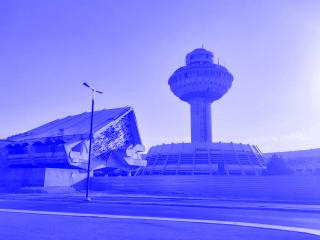
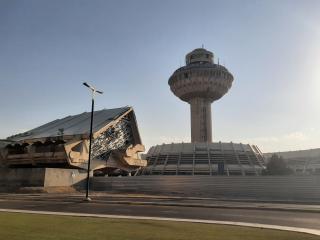
This research aims to explore the social and cultural history of modernist architecture in the Soviet Union from the perspective of regional experiences and to examine how its heritage is represented and perceived today in various national, ideological and cultural contexts. To shift the perspective from the metropolitan to regional centres, the study, inter alia, pays special attention to the modernist urban construction in Soviet Armenia and the Urals region (specifically the socialist city of Uralmash, Yekaterinburg). Tracing the emergence of the local modernist architectural tradition in Soviet Armenia and its connection with Armenian national art and cultural identity, the project examines the establishment of one of the most outstanding regional versions of post-war modernism. Its current reappropriation will be analysed against the backdrop of a gradual reevaluation of the Soviet-era legacy.
The interdisciplinary study draws on historical archival materials, in-depth interviews and analysis of various media sources.