Subject Area
Transnational Knowledge Transfer and Academic Cooperation
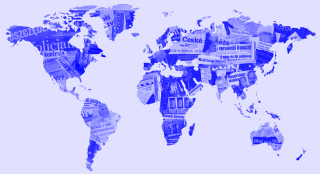
Those researching the history of knowledge and science are increasingly, and more intensively, working from a transnational perspective. This trend is in line with studies of such border-crossing relationships of transfer and exchange in the production and circulation of knowledge in Eastern Europe, which are shaped particularly strongly by global connections. The analyses of selected sub-fields of history, social and economic studies and the natural sciences connect approaches focusing on ideas, societal elements and institutions with questions from transnational and global history.
This centres around three dimensions: (1) the circulation and reception of knowledge from Eastern Europe; (2) knowledge about the region beyond its borders; as well as (3) transregional and international cooperations established or co-created by researchers from the region. Researchers aim at understanding Eastern Europe as an extremely interwoven and globally influential knowledge sphere, and at reflecting on how historical, social, regional and cultural studies continue to construct the region of Eastern Europe to this day.
Research Subjects
Epidemic in a war and post-war context: The »Spanish Flu«
This project takes a comparative look at the spread of Spanish flu in Belgium and Poland. On the one hand, the aim of this research is to understand how Spanish flu arrived and spread in the two territories under German rule, and to measure its course, extent, consequences; on the other, it studies how the epidemic was perceived, understood and fought.
Histories of Historiography
The history of historiographies in Eastern Europe is currently displaying a trend towards (re)nationalisation. In contrast, these researches aim to reconstruct border-crossing exchanges of historians from the region as well as underline their active engagement with world history.
Ice Age Research and Ornithology
The history of exploring animate and inanimate nature in Eastern Europe is closely linked to the region's cultural history. The aim of these scientific and historical investigations is to shed light on the transnational links between glacial geology and ornithology.
Imperial Meaning-Making of Central Asian Social Spaces
The project reconstructs the geographical imaginations of social spaces in travel writing about Central Asia for the Russian Empire and their transformation from 1839 to 1905. It takes into account a wide range of communication levels, such as the relationships between authors and publishers, the motivations for travel and the authors’ networks.
International Lawyers and Legal Activists
The League of Nations served as a platform where international lawyers and legal activists with varying agendas were actively engaged. Significant initiatives were undertaken within its commissions, international legal organisations and non-governmental bodies – particularly in the fields of international criminal law and humanitarian law.