GWZO at the Leipzig Book Fair

Leipziger Buchmesse 2026
The Leipzig Book Fair is the largest spring event in the publishing and media industries and a key meeting point for literature enthusiasts, authors and publishers from around the world. It is accompanied by the reading festival Leipzig liest (»Leipzig reads«), which transforms the entire city into a stage for literature, featuring hundreds of events across a wide variety of venues.
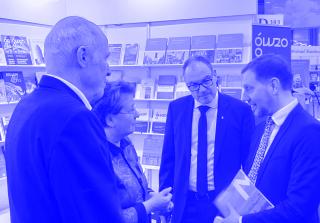
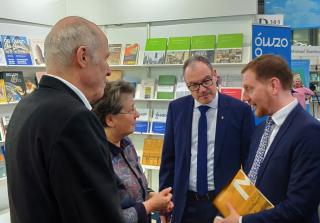
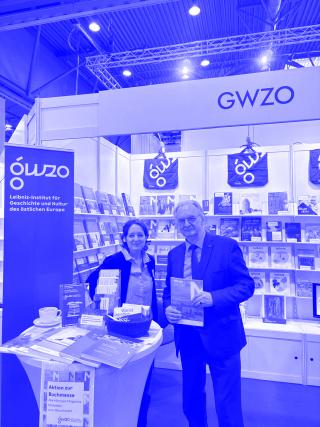
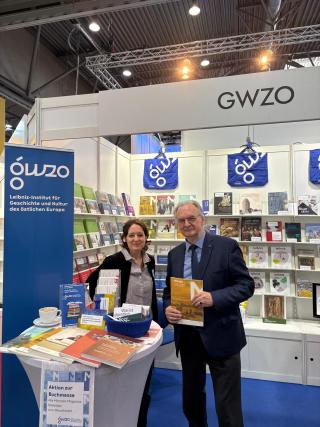
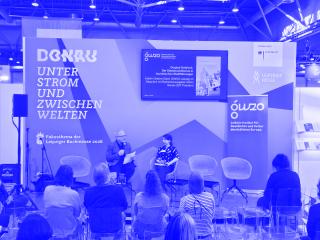
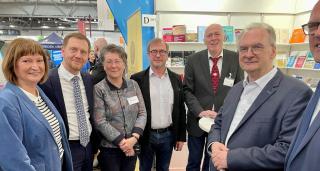
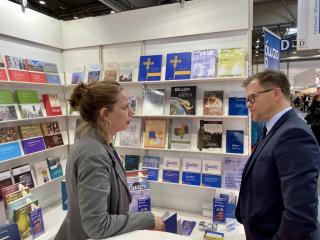
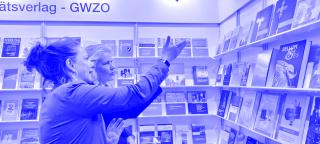
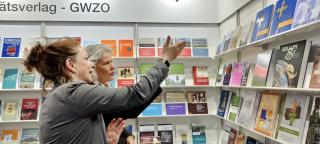
In 2026, the GWZO was once again represented with its own stand at the Leipzig Book Fair. Our participation coincided with the focus theme »Danube – Strong Currents and Between Worlds«, which fit perfectly with the GWZO’s research priorities. Through our work on the history and present of the Danube region, on transregional entanglements and on cultural spaces, we contributed diverse perspectives and numerous publications to this theme.
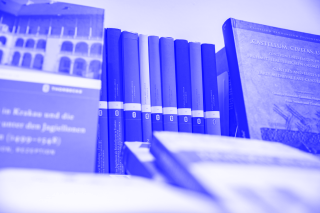
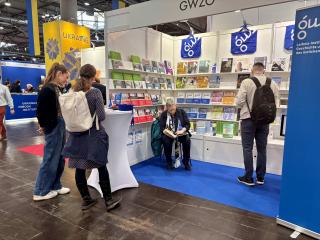
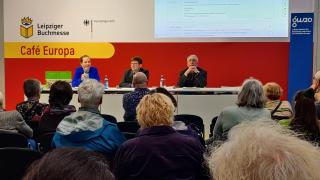
At our stand visitors had the chance to explore our latest publications, experience different science communication formats such as digital exhibitions and engage directly with our staff.
Thursday, 19 March 2026 (Please note: Event will be held in German)
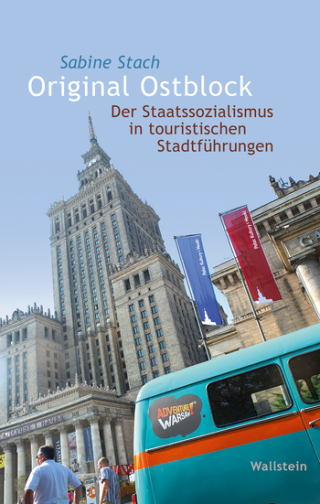
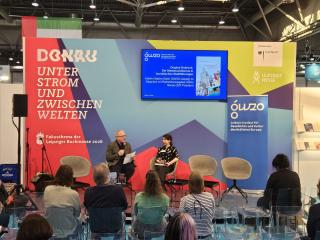
Original Ostblock. Der Staatssozialismus in touristischen Stadtführungen
[Original Eastern Bloc. State Socialism in Tourist City Tours]
History is increasingly consumed as an experience. This is particularly true of heritage tourism. But what happens in concrete terms when local or national pasts are marketed to an external, international audience? Cultural studies scholar Sabine Stach explores this question by examining a key touristic format: the guided city tour. Using the increasingly popular “communism tours” as an example, she investigates how the legacy of the Cold War in Warsaw, Prague and Bratislava is interpreted for tourists and staged as an authentic experience.
Author Sabine Stach (GWZO) in conversation with Achim Saupe (ZZF)
Time: 5:00–5:30 pm
Venue: Donau-Bühne (Hall 4, D300/C301)
Organised by the GWZO
Friday, 20 March 2026 (Please note: Event will be held in German)
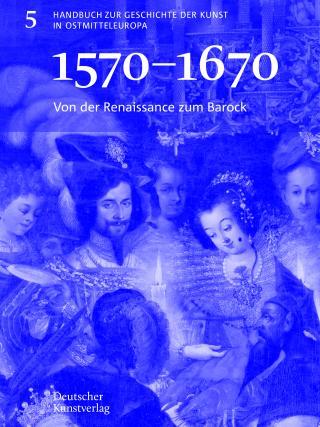
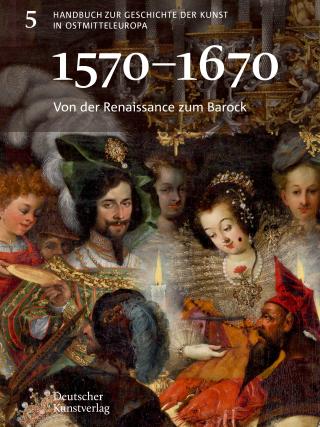
Handbuch zur Geschichte der Kunst in Ostmitteleuropa. Band 5: 1570–1670
[Handbook of the History of Art in East Central Europe. Volume 5: 1570–1670]
With the fifth volume of the Handbook of the History of Art in East Central Europe, the GWZO continues its large-scale publication project. This volume focuses on the period from around 1570 to 1670 — a time of profound political, religious and artistic change in East Central Europe. At its core are processes of exchange and transformation as manifested in the architecture, painting, visual arts and decorative arts of the period: between Renaissance and Baroque, between Reformation and Counter-Reformation, and between urban centres, aristocratic residences and religious institutions.
Series editor Wilfried Franzen (GWZO) in conversation with the volume editors Agnieszka Gąsior (Silesian Museum in Görlitz) and Marius Winzeler (Green Vault and Armoury, Dresden State Art Collections)
Time: 5:00–5:30 pm
Venue: Donau-Bühne (Hall 4, D300/C301)
Organised by the GWZO
Friday, 20 March 2026 (Please note: Event will be held in German)
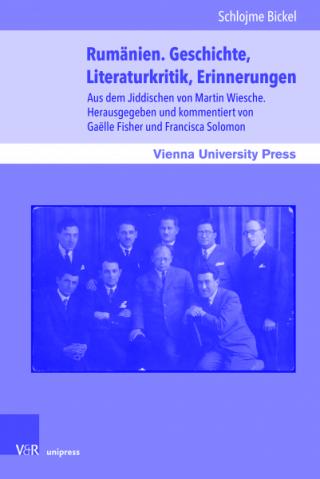
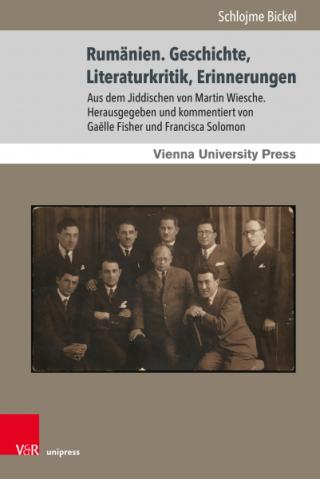
Jiddische Perspektiven auf Rumänien in der Zwischenkriegszeit
[Yiddish Perspectives on Romania in the Interwar Period]
This live recording of the detektor.fm Forschungsquartett is dedicated to the new edition of Schlojme Bickel’s monograph Romania: History, Literary Criticism, Memories (1961). Written in American exile, the work of the Yiddish-language author paints a vivid picture, in 37 chapters, of Jewish life in Romania from the late nineteenth century through the postwar period. The conversation explores the role of Yiddish culture in interwar Romania, questions of memory, language, and identity in exile, as well as the contemporary relevance of a work that bears witness to a vanished world.
Editor Gaëlle Fisher (GWZO) and Carolin Piorun (Dubnow Institute) in conversation, moderated by Jessica Hughes (detektor.fm)
Time: 3:00–4:00 pm
Venue: GWZO, Specks Hof, Reichsstr. 4–6, 4th floor
Organised by the GWZO in collaboration with the Leibniz Institute for Jewish History and Culture – Simon Dubnow
Friday, 20 March 2026 (Please note: Event will be held in German)
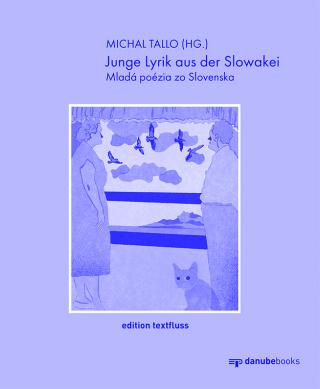
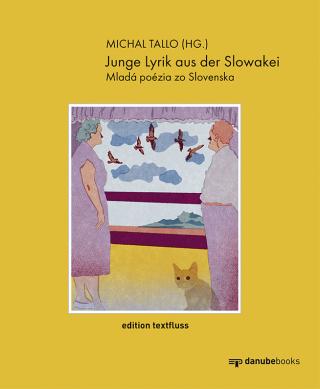
Slowakische Perspektiven: Junge Lyrik aus der Slowakei
[Slovak Perspectives: Young Poetry from Slovakia]
This panel discussion is dedicated to the anthology Young Poetry from Slovakia. Mladá poézia zo Slovenska. Editor Michal Tallo presents the bilingual selection featuring 13 young talents, including minority voices and experimental approaches. The volume reflects an open engagement with contemporary social issues and explores complex, compelling themes. The discussion will address the beauty, distinctiveness, and aesthetics of young Slovak poetry, as well as the cultural bridges between Slovakia and Germany. In its own way, this poetry sets itself apart from previous generations and invites audiences to (re)discover a vibrant Central European understanding of literature.
Stephan Krause (GWZO) in conversation with editor Michal Tallo and translator Stefanie Bose
Time: 7:30–8:30 pm
Venie: GWZO, Specks Hof, Reichsstr. 4–6, 4th floor
Organised by the GWZO in cooperation with the Honorary Consul of the Slovak Republic for Saxony and Thuringia, Danube Books Verlag, and the Slovak Literary Centre
Saturday, 21 March 2026 (Please note: Event will be held in German)
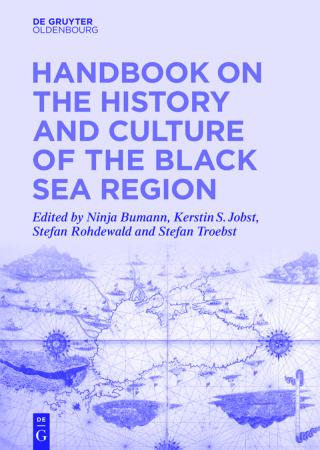
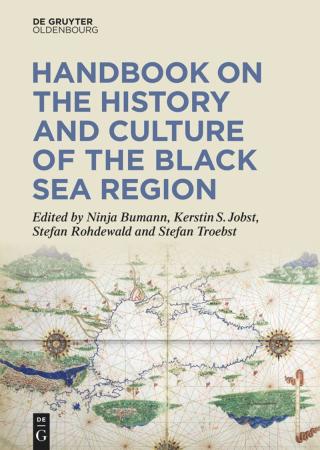
The Black Sea Region as a Transcontinental Space
Since the nineteenth century, the Black Sea region has been at the centre of global political conflicts, linking the Balkans, the Caucasus and East Central Europe. The new Handbook on the History and Culture of the Black Sea Region brings together 39 international authors who analyse conflicts, cooperation, and processes of exchange from antiquity to the present, conceptualising the region as a distinct transcontinental space. The volume explores political orders, infrastructure, migration, as well as ethnic and religious entanglements that have shaped local societies, empires and nation-states and continue to structure current crises.
Panel discussion with Stefan Rohdewald (Leipzig University), Stefan Troebst (GWZO), Kerstin Jobst (University of Vienna), Ninja Bumann (University of Giessen), Steffi Marung (Leipzig University), Florian Riedler (Leipzig University), and Dennis Dierks (Leipzig University)
Time: 6:00–7:30 pm
Venue: Stadtbüro Leipzig, Burgplatz 1, entrance via Markgrafenstraße 3
Organised by the GWZO in cooperation with Stadt Leipzig – Referat Internationale Zusammenarbeit, the Chair of Eastern and Southeastern European History at the University of Leipzig and the Südosteuropa-Gesellschaft (SOG)
Saturday, 21 March 2026 (Please note: Event will be held in German)
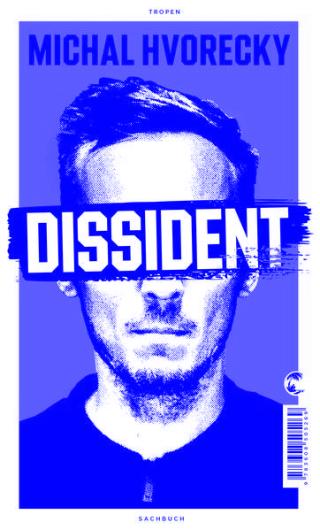
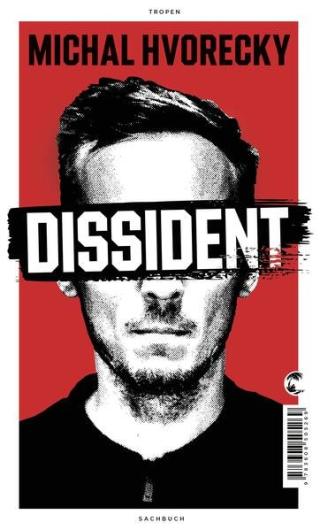
Challenging Hate – Resisting the Shift to the Right in Europe
The euphoria of the Velvet Revolution, the hopeful new beginning in a new Europe — and today, the struggle against ultra-right cultural policy in Slovakia. Drawing on his own life story, the author and journalist Michal Hvorecký traces Europe’s path from the fall of the Iron Curtain to the return of authoritarian ideologies. With a keen sensitivity to the fine fractures within society, Michal Hvorecký weaves together his personal memories and experiences with a sharp analysis of the contemporary political landscape. A courageous text about the fragility of democracy, the strength of civil society, the new dissidents of the twenty-first century and the necessity of speaking out.
Stephan Krause (GWZO) in conversation with Michal Hvorecký
Time: 7:30 pm
Venue: Buchhandlung SeitenBlick, Goetzstraße 2
Organised by GWZO in cooperation with KLETT-Cotta J. G. Cotta'sche Buchhandlung Nachfolger GmbH and Tropen Verlag.