»Forschungsquartett« GWZO-Podcasts


GWZO-Podcasts on »detektor.fm«
Listen to Central and Eastern Europe
Together with our media partner detektor.fm, we publish podcast episodes on current research topics from our institute several times a year as part of the »Forschungsquartett« (Research Quartet) series. The series, to which other non-university research institutions also contribute, can be listened to on the broadcaster’s website, subscribed to via all major podcast platforms or replayed at any time in our media library. The podcasts are normally recorded in German.
Forschungsquartett | What a Volcanic Eruption has to do with the Plague


In this episode of the »Forschungsquartett« podcast by detektor.fm, our GWZO colleague Martin Bauch discusses the connection between a volcanic eruption and the plague in the 14th century. For a long time, the prevailing theory was that the plague had reached Europe as a biological weapon. Recent interdisciplinary research presents a different perspective: to avert climate-induced famine, Italian city-states organised grain imports from the Black Sea region. However, the plague pathogen inadvertently travelled aboard the ships. In the interview, Martin Bauch explains how tree rings and ice cores provide evidence of this cold snap and why interdisciplinary research is indispensable for understanding historical crises.
Forschungsquartett | The Knowledge of the People
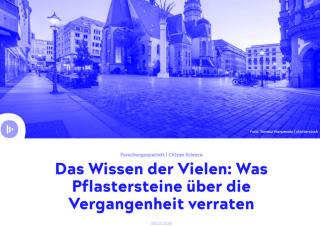
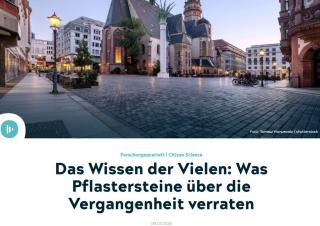
This episode of »Forschungsquartett« focuses on the participatory »citizen science« approach, which incorporates the everyday, experience-based knowledge of ordinary citizens into research. The Detektor.fm presenter Wieland Mikolajczyk speaks with Dr. Stephanie Weismann (GWZO). The focus is on her project »Leipzig Pavement Hi/Stories«, which collects personal experiences of the city that are not found in traditional archives. Whether 19th-century granite slabs, copper slag bricks or concrete tiles from the GDR era – the paving becomes a testament to urban transformation. Through photos, online forms or voice memos, citizens can share their experiences and thus become part of a digital city archive.
Forschungsquartett | Chronicler of a Lost World


How can a vanished way of life be preserved? In »Rumänien. Geschichte, Literaturkritik, Erinnerungen« (Romania: History, Literary Criticism, Memories), Schlojme Bickel paints a vivid picture of Jewish life in interwar Romania – now available in German for the first time. In this live edition of the podcast »Forschungsquartett«, recorded as part of the Leipzig Book Fair, detektor.fm presenter Jessica Hughes speaks with Gaëlle Fisher (GWZO) and Carolin Piorun (Leibniz Institute for Jewish History and Culture – Simon Dubnow). Together, they discuss the significance of Bickel’s work and the academic perspectives arising from this first German translation.
Forschungsquartett | Höchste Zeit für Kanon
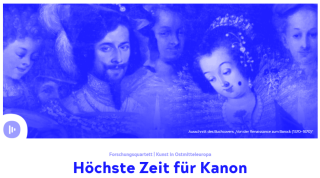
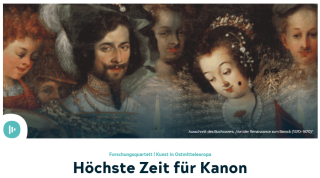
Wie fängt man die Kunst eines großen Kulturraumes über einen Zeitraum von 100 Jahren ein? Was wählt man aus? Der neue Band der Reihe »Handbuch zur Geschichte der Kunst in Ostmitteleuropa« unternimmt den Versuch einer Kanonisierung für die Zeit zwischen Renaissance und Barock.
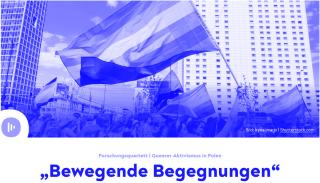
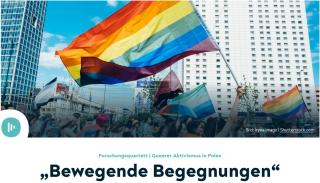
Forschungsquartett (live) | The Value of the Humanities


What are the tasks and goals of modern humanities? And why is a career in the humanities valuable – for both society and for researchers – despite all the challenges? Three humanities scholars from the GWZO discussed these questions during the Long Night of Sciences on June 20, 2025, in Leipzig.
Forschungsquartett | Rockets and Protection of Historical Monuments

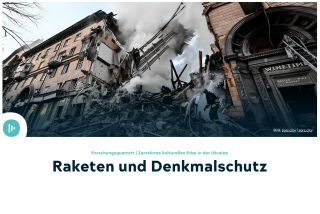
Russia’s war of aggression against Ukraine has been ongoing for three years now. Tens of thousands of people have been killed since the start of the war. Alongside the loss of human lives, architectural heritage is also being destroyed. A digital exhibition by the Leibniz Institute for the History and Culture of Eastern Europe (GWZO) deals with this topic.
Forschungsquartett | The Classics of Romanian Film
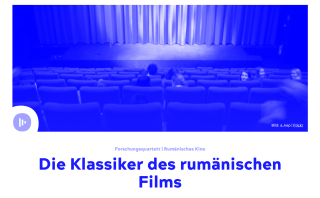
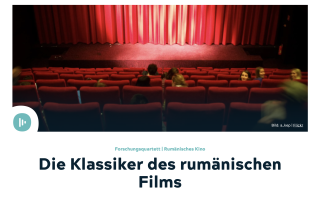
Romanian cinema has received little attention in Germany. A new book, »The Classics of Romanian Film«, aims to change this. Various authors present 25 Romanian works, starting from 1912 – more than 100 years of film history reflecting the development of Romanian society. In conversation with detektor.fm, Stephan Krause explains why it is worth exploring this history – and shares his favourite Romanian films.
Forschungsquartett | Horsemen-Warriors-Nomads
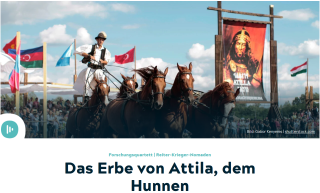
Centuries ago, various horsemen-warriors-nomads lived in the territory of present-day Hungary. Over the past few decades, this »nomadic« heritage has played an increasingly important role in shaping Hungarian identity. But which peoples belonged to this group, and what remains of their legacy today?
In this episode, Historian and archaeologist Orsolya Heinrich-Tamáska discusses these questions with the editors of detektor.fm.
Forschungsquartett | Language in War: How has the language in Ukraine changed?
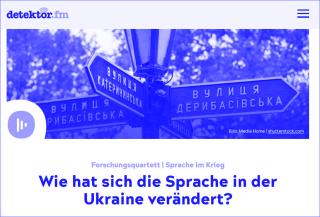
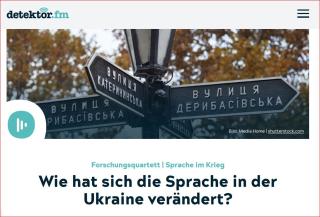
Since Russia’s attack on Ukraine, the linguistic situation within the country has changed rapidly: more and more people are now speaking Ukrainian instead of Russian. To what extent does the war influence language? Ukrainian has become the language of resistance, while Russian is increasingly stigmatised as the language of the enemy.
The editors of detektor.fm spoke with Monika Wingender, Professor of Slavic Linguistics at Justus-Liebig-University Giessen, who gave a keynote lecture on this topic at this year’s GWZO annual conference.
Forschungsquartett | Migration to Romania: »Wir sind hier für die Stille«
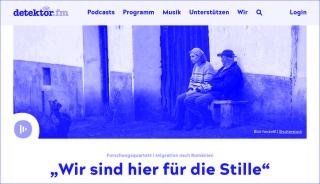
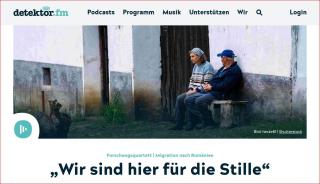
In her debut novel »Wir sind hier für die Stille«, Dorothee Riese (Assistant to the Directorate at the GWZO) combines fiction with personal memories from Romania in the 1990s. How autobiographical is the novel? How does she approach her own history both literarily and scientifically? And how do personal experiences, professional experiences and artistic constructions complement each other? Dorothee Riese explains this in conversation with the editors of detektor.fm.
Forschungsquartett | Ukrainian Memory Culture: How Does Commemoration Work in Times of War?
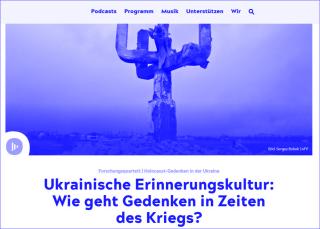
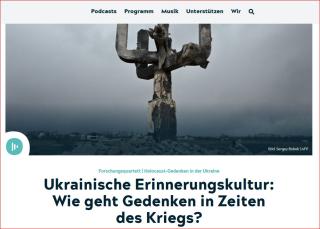
Russia’s war of aggression is deeply affecting Holocaust commemoration in Ukraine. People are dying whose memories helped keep remembrance alive. At the same time, monuments commemorating, for example, the murder of thousands of Jews are being destroyed in the war. How does this destruction affect memory culture? Dr. Svitlana Telukha explores these questions in a conversation with the editors of detektor.fm.
Forschungsquartett | Right-Wing Extremists and History: The Far-Right Fascination with Vikings and More
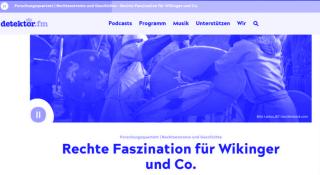
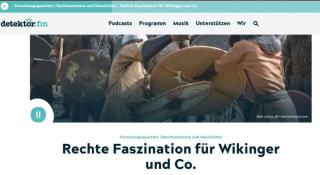
Every year, a Viking festival takes place in the Polish town of Wolin – a major event for the town and for many visitors. But why do right-wing extremists also mingle with the crowd? What role does history play for the far right, and how can societies respond to this phenomenon? Dr. Karin Reichenbach discusses these questions in conversation with the editors of detektor.fm.
Forschungsquartett | What Remains of the »Treuhand«?
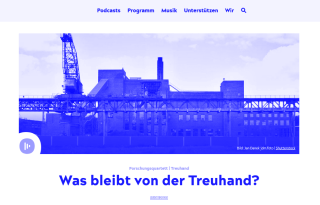
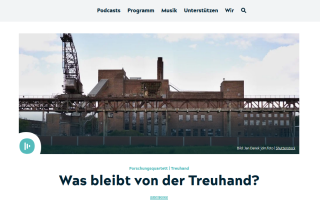
The Treuhand was established to save thousands of East German companies from collapse. Its goal was to privatise and restructure them. In the process, however, hundreds of companies were shut down. What remains of the Treuhand’s legacy today? The editors of detektor.fm spoke with Dr. Max Trecker for this collaborative episode.
Forschungsquartett | Why do we Know so Little about Ukraine?
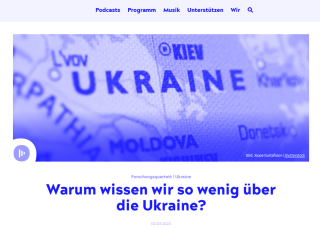

Since the beginning of the war last year, Ukraine has been more present in the media than ever before. Yet in-depth knowledge about the country, its history and its culture remains rare within German society. A digital educational initiative by the GWZO and other institutions of the Leibniz Association aims to change this. Detektor.fm reports.
Forschungsquartett | Diaspora from Armenia: From Manila to Amsterdam
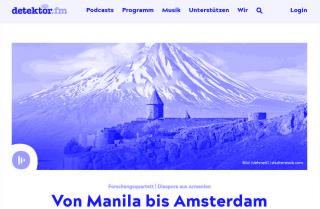
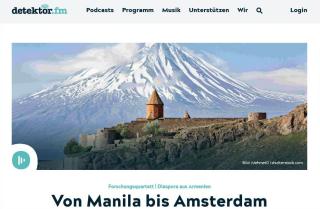
Between Asia and Europe, in the Caucasus Mountains, lies Armenia – a country with a rich and ancient culture. Armenians live not only there, but all over the world. Across all continents, Armenian communities have formed at different times. Our colleague Hakob Matevosyan talks about the Armenian diaspora in the detektor.fm.
Forschungsquartett | How does Research Work in Exile?

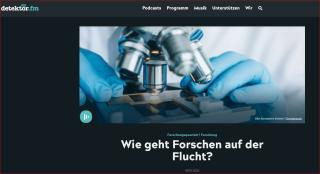
How does research work in exile? Natalia Khamaiko and Anastasiia Korochina spoke about this with the detektor.fm editors. Both are visiting researchers at the GWZO and work on archaeological topics in the »Humans and Environment« department. They share their experiences of fleeing their home country and how they were able to continue their research at the GWZO.
Forschungsquartett | State Feminism: Pro-Feminist Innovations or Propaganda?
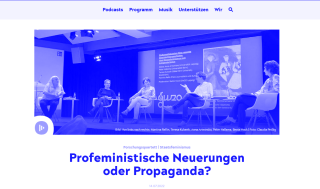
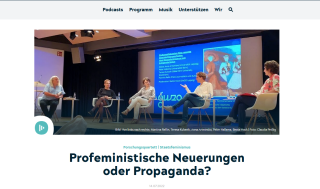
After 1989, various debates emerged about feminism and equality in unified Germany. While many East German women viewed equality as self-evident, they were accused by West Germans of adhering to propagandistic state feminism. In a panel discussion in mid-June, Anna Artwińska, Peter Hallama, Teresa Kulawik, Martina Rellin and Beáta Hock explored this topic. detektor.fm was also in attendance. The event at the Zeitgeschichtliches Forum Leipzig was part of our GWZO Lecture Series.
Forschungsquartett | Separatist Movements after the Collapse of the Soviet Union
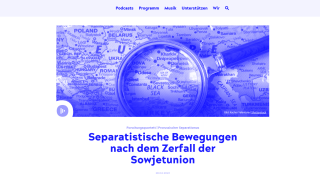
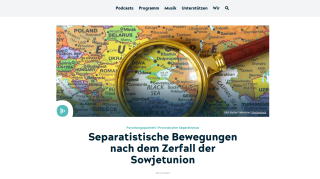
In this episode of the Research Quartet, detektor.fm editor Charlotte Müller talks with Jan Zofka about the period when pro-Russian separatist movements emerged – what triggered them, and which social groups supported them.
Forschungsquartett | Does Historical Tourism Distort History?
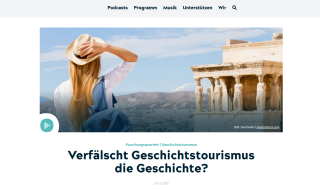
Whether in Cairo, Moscow or Berlin, more and more people want to experience history while on vacation. Historical tourism is booming. But what effect does this trend have on how history is conveyed – and what impact does it have on local communities? Sabine Stach (GWZO) spoke with detektor.fm about these questions.

Forschungsquartett | Transformations before, during and after the Turn: Cultural Promotion in the East
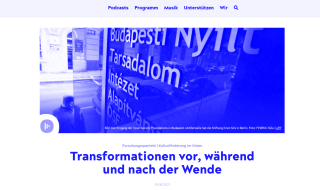
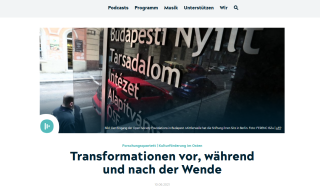
With the collapse of the Soviet Union, the cultural sector also had to find new paths. Private foundations stepped in to fill the gap in cultural promotion. detektor.fm spoke with Beáta Hock (GWZO) about cultural support and transformation in the former Eastern Bloc.
Forschungsquartett | All Truths are Entitled: Bellum et Artes – Art in War
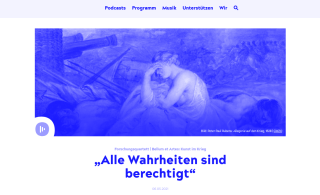
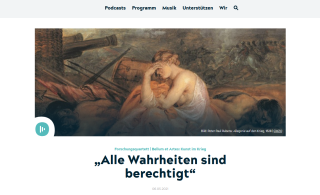
The Thirty Years’ War was brutal – marked by looting, mistreatment and murder, while epidemics swept across Europe. Yet, despite the violence and suffering, art was still created during this period. A forthcoming research project will showcase this art and explain the role artworks played during the war.


Forschungsquartett | Old Myths and New Facts – A New History of the Old Saxons
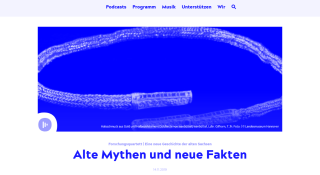
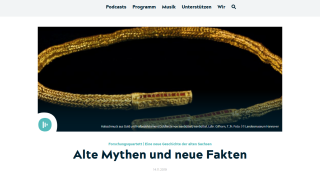
Professor Matthias Hardt, subject coordinator for Medieval History and Archaeology at the GWZO, spoke with detektor.fm about the Saxons. Many legends surround the Old Saxons, but from today’s perspective, many of these stories have been refuted. For example, it is said that the Lower Saxons fought fiercely against Charlemagne or in the Battle of the Teutoburg Forest and remained united – a historical narrative that was later appropriated by the National Socialists.
Forschungsquartett | In vino veritas: Burgundian Grape Harvests Reveal Climate Change
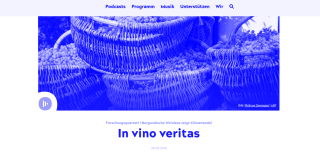
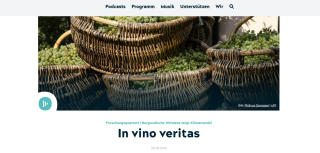
Detektor.fm spoke with Dr. Thomas Labbé, lead author of a study on the historical development of grape harvests in Burgundy, about the connection between grape harvesting and climate change. Labbé is a climate historian at the GWZO, researches the topic »The Dantean Anomaly (1309-1321). Rapid Climate Change and Late Medieval Europe in a Global Perspective« as part of the Freigeist Junior Research Group.
Forschungsquartett | Little Researched: LGBTQ in the Soviet Union
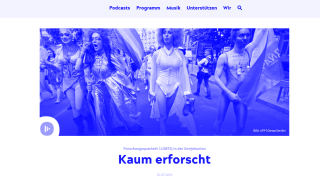
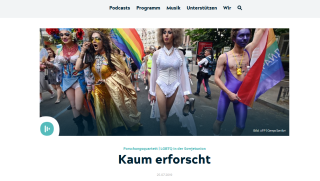
Sociologist Galina Yarmanova, who researches in the field of gender and queer theory and is currently a visiting researcher at the GWZO, spoke with detektor.fm about LGBTQ lifestyles in late Soviet society. She also explains why gender studies are becoming less accepted today.
Forschungsquartett | Architecture as a Weapon: Collective and Commune Houses in Europe

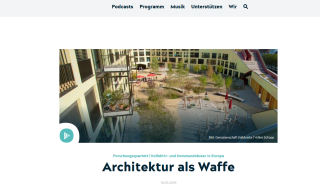
Can architecture educate people towards a better social coexistence? What may sound utopian has repeatedly inspired architects to design collective and commune houses. »In our European cultural circle, commune houses have not worked because there is this constant need for individualism. There is, of course, also a need for community – but at the same time, a need for privacy, self-determination, and family life«, says Arnold Bartetzky (GWZO).
Forschungsquartett | On a Utopian Mission: Sci-Fi from the Eastern Bloc


Science fiction from socialist Eastern Europe has long been overshadowed by its Western counterparts. Yet fascinating film projects also emerged behind the Iron Curtain – works that reveal much about the societies from which they originated. Maciej Peplinski (GWZO), who is pursuing his PhD on science fiction in the former Eastern Bloc, explains what makes these films so distinctive in an interview.
Forschungsquartett | The Other 68ers: The Prague Spring
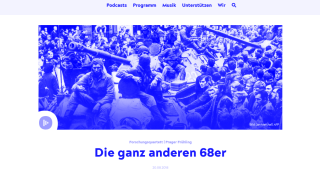
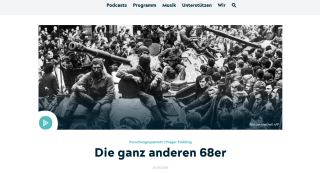
The Prague Spring is often seen as part of the Western European ‘68 movement – a misconception, says Eastern Europe historian Martin Schulze Wessel. But why is the Prague Spring still often misunderstood today? And what is its legacy? detektor.fm moderator Lars-Hendrik Setz speaks with Martin Schulze Wessel about these questions.
Forschungsquartett | The Heavy Legacy of Art Looting: Art Looting in Poland
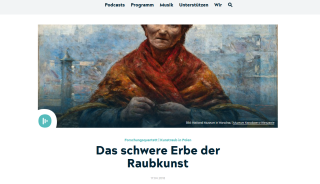
During World War II, National Socialists carried out extensive art looting in Poland. This historical art theft continues to have serious consequences for Polish art history today. What are the lasting effects in Poland? detektor.fm editor Lars-Hendrik Setz spoke with art historian Nawojka Cieślińska-Lobkowicz about this topic.
Forschungsquartett | Mirror of Society: Football in Eastern Europe
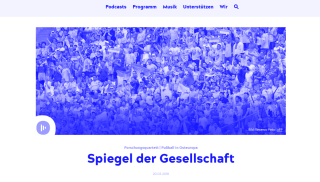
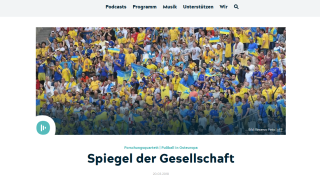
With the World Cup in Russia and the Champions League finals in Kiyv, 2018 became a landmark year for Eastern European football. Yet football has long played an important role in the region. What significance does football hold in Eastern Europe? detektor.fm reporter Lars-Hendrik Setz spoke with Dirk Suckow and Stephan Krause (GWZO) about this.
Forschungsquartett | The Conflict Continues: Separatism in Eastern Europe

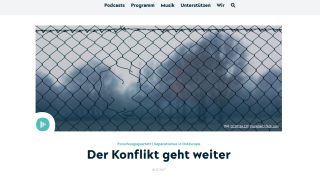
Independence remains a pressing issue for many ethnic groups. In the former Soviet Union, numerous separatist movements have existed for years – though they operate somewhat differently here. What is the current relationship between Russia and Ukraine? And is there a solution that could be acceptable to both sides? detektor.fm reporter Isabel Woop discussed these questions with Stefan Troebst and Alexander Osipian (GWZO).