Topic
Cotton Empire in the East

The project explores the interconnectedness of state socialism with the global economy by following the commodity chains of cotton. Its scope ranges from agro-biological knowledge transfers and international trade to exchanges in the textile machine-building industry.
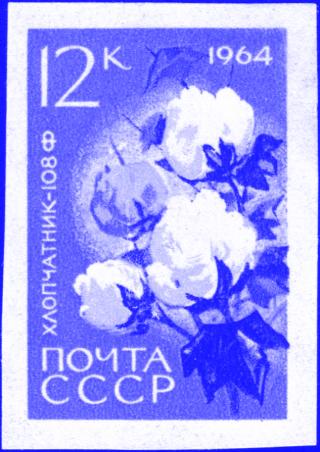

The Cotton Empire in the East: A Commodity History of the Soviet Bloc
The project takes cotton as a starting point to approach the history of the Soviet bloc’s transregional connections. It sets out to find out to what extent the global capitalist »Empire of Cotton« (Sven Beckert) impacted the Soviet bloc and vice versa. Therefore, the project will follow cotton in the Soviet bloc through various layers of the commodity chain: from agricultural techniques and agro-biological knowledge transfers to international trade and from textile production to exchanges in the associated machine-building industry. Such an approach thus takes us from cotton-growing fields in the Soviet Union (Central Asia/South Caucasus) and Bulgaria to the attempts of socialist planners to move the cotton frontier and expand cultivation in the Balkans and the Soviet Union’s southwest. It also leads us to agro-biological research institutes in Bulgaria and the Soviet peripheries, to textile production centres in Central Europe, to the sites of textile machinery production (not least in the East German city of Chemnitz), to UN commissions dealing with the regulation of the postwar cotton and textile trade, and to global cotton trading hubs like Alexandria or Liverpool. It highlights the Soviet bloc’s integration in global knowledge networks, economic flows and trade infrastructures, as well as its contribution to shifting cotton’s global commodity frontier. The project is part of the Collaborative Leibniz project »Commodity Frontiers in Eastern Europe (16th-21st Centuries)«.
Related Subproject:
»The Soviet Cotton Frontier in Tajikistan (1930-1991)«, edited by Aksana Zakirova
Partners in the Collaborative Leibniz Project »Commodity Frontiers in Eastern Europe«:
- Mining Museum Bochum: Tina Asmussen, Amelia Hutchinson »Mining frontiers in the Kingdom of Hungary, 16th -18th century«
- IOS Regensburg: Guido Hausmann, Tamara Qeburia »Manganese ore frontier in West Georgia and Southeast Ukraine, late 19th century-1950s«
- IOS Regensburg: Arevik Gnutzmann-Mkrtchyan »Historical Trade Agreements – A contemporary economic perspective«
- GWZO Leipzig: Jan Zofka, Aksana Zakirova »The Cotton Empire in the East. A commodity history of the Soviet bloc«