
Subject Area
Operating in the Global Economy
The East European economy has confronted dynamic processes of economic globalisation since the middle of the 19th century. Peripheralisation and global economic crises, world wars and the Cold War formed strongly fluctuating frameworks that shaped the regional efforts to modernise economy and society.
These researches focus on how East European economic actors reacted to these challenges, as well as their efforts to influence processes of globalisation through actively operating in line with their own interests and ideas. In doing so, the work critically scrutinises the previously dominating views of the East European economy as »backward« or »diverging from the normal path«. It does so by paying more attention to reciprocal trans-national and trans-regional interconnections in the field of foreign trade and infrastructure politics as well as the transfer of capital, technologies and development concepts. These studies examine both structural changes and constellations of actors to analyse the manifold positioning strategies of East European states, social groups and individuals employed in the process of economic globalisation.
Research Themes
Armenian Merchant Networks
The globalisation of trade and the proliferation of merchant networks were defining features of the early modern period. In Central and Eastern Europe, most of the long-distance trade was conducted by stateless diaspora communities, including Armenians, Greeks and Jews. Among them, Armenian merchants were particularly successful, establishing trade routes that spanned from Poland-Lithuania to Russia, the Ottoman Empire and Persia.
Cotton Empire in the East

The project explores the interconnectedness of state socialism with the global economy by following the commodity chains of cotton. Its scope ranges from agro-biological knowledge transfers and international trade to exchanges in the textile machine-building industry.
Energy Policy in Czechia and Slovakia

This project examines the processes of energy transformation in Czechia and Slovakia from the 1960s to 2004. It focuses on the trade-offs between energy security, economic competitiveness, and environmental objectives.
Global Trade
As part of researches into Eastern Europe’s trade relations with other parts of the world from the late 19th century to the present, this section particularly analyses the politics of foreign trade and infrastructure as essential elements of East-European positioning strategies within economic globalisation.
Industrial Enterprises in the Transition to Socialism

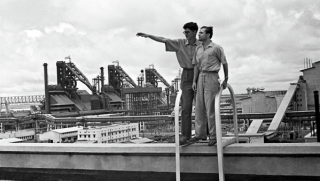
The project examines the transnational connections of industrial enterprises during the phase of bloc–building in the early Cold War. It explores the dynamics of continuity and change and challenges notions of bloc »autarky« and Cold War bipolarity.
Origins of Socialist China’s Automobile Industry
This project revisits the origins of China’s automobile industry by examining pre-socialist car manufacturing workshops in Shanghai. It highlights continuities in expertise and production practices that shaped the early PRC vehicle sector.
The Soviet Cotton Frontier in Tajikistan (1930-1991)

The project examines how the Soviet cotton frontier connected Tajikistan with broader transnational and global processes through networks of scientific cooperation, trade and expertise.