Topic
Industrial Enterprises in the Transition to Socialism

The project examines the transnational connections of industrial enterprises during the phase of bloc–building in the early Cold War. It explores the dynamics of continuity and change and challenges notions of bloc »autarky« and Cold War bipolarity.
Bloc–Building and (Dis-)Continuity: Cross-border Connections and Transformations in Industrial Enterprises in East Central Europe and China, 1945-1960
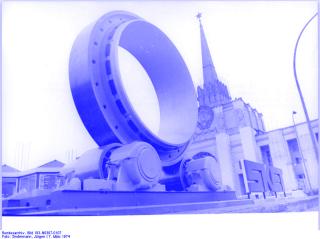
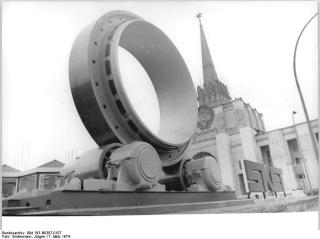
The project examines the transnational connections of industrial enterprises during the phase of bloc-building in the early Cold War. The genesis of the socialist camp implied a massive reorientation of the Chinese and East Central European economies towards the Soviet Union. At the macro-level of trade statistics this process may seem clear and linear, but what happened at the level of enterprises? The project explores the dynamics of continuity and rupture in industrial enterprises’ pre-existing cross-border connections, ranging from trade networks to know-how exchange. Individual studies will examine cases from the machine-building and vehicle-construction industries in China, Czechoslovakia, Poland, Bulgaria and East Germany. At the GWZO, the East German producer of cement industry facilities Polysius in Dessau and the Bulgarian textile machinery producer, DMZ in Gabrovo, will be examined, as well as the early PRC automobile industry cluster in Shanghai. With this new approach to the genesis of the Soviet bloc and its economy, the project challenges the widespread notions of bloc »autarky« and Cold War systemic bipolarity.
Related Subproject:
Origins of Socialist China’s Automobile Industry, edited by Wenjie Zhou
Project partners:
Tomasz Olejniczak; Associate Professor in the Department of Management, Director of Doctoral School, Kozminski University, Warsaw
Aleš Skřivan; Professor in Economic and Social History, Chair of Department of Economic History, Prague University of Economics and Business
Valeria Zanier; Associate Professor for Chinese Studies, Universitá di Bologna