Topic
The Climate History of the Altai Mountains
This study investigates climate change and herder adaptation in the Altai Mountains (1950–2020). By integrating climatic, demographic and land-use data with qualitative field research, it reveals the dynamic interactions between environmental transformations and nomadic pastoral livelihoods.

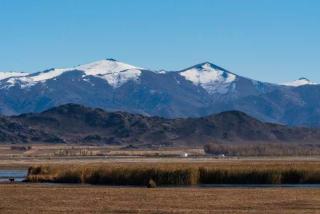
Agrarianisation and Sedentarisation: Climate Adaptation among Nomadic Pastoralists in the Altai Mountains of China (1950-2020)
Climate change strongly affects high-altitude regions, particularly mountain systems in arid zones. The Altai Mountains in China’s northwest are highly vulnerable and have experienced some of the country’s most rapid warming over the past four decades, with extreme weather posing serious threats to the region’s fragile nomadic economy. In response to these challenges, this research investigates both climatic developments and societal adaptation. Existing natural-science studies tend to focus on large-scale, long-term trends, while research in the humanities and social-sciences often concentrates on industrial-era policies or migration, and rarely integrates climate factors. This project takes an interdisciplinary approach, combining historical, geographical, qualitative and quantitative methods. Using data from 1950–2020, it reconstruct trends in climate change, population dynamics and pasture use, examining their correlations and causal links. Qualitative methods — analysis, literature review and field interviews — explore how herders perceive and adapt to climatic stress. Moving beyond theoretical or macro-level adaptation studies, this research offers a detailed, dynamic understanding of herder adaptability in a rapidly changing environment. It forms part of the project »Melting Mountains: Environment, Society and the Vertical Climate Frontier in the Greater Altai (1950–2020)«.