Topic
The Soviet Cotton Frontier in Tajikistan (1930-1991)

The project examines how the Soviet cotton frontier connected Tajikistan with broader transnational and global processes through networks of scientific cooperation, trade and expertise.
The Soviet Cotton Frontier in Tajikistan: Knowledge Transfer, Trade, and Expert Exchange (1930-1991)
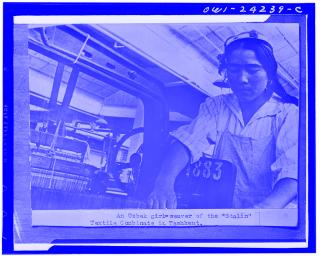
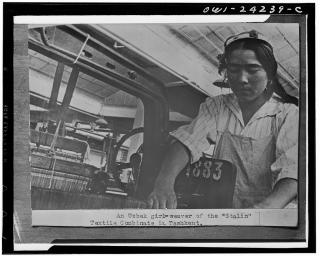
While cotton has often been studied within national or imperial frameworks, the project shifts attention to the networks of exchange that connected cotton-producing localities in the Tajik SSR to the socialist world and broader global flows of knowledge, expertise and commodities. Through the lens of the concept of commodity frontiers, the project focuses on the Vakhsh Valley and the Vakhsh Cotton Breeding Station in southern Tajikistan, which, by the 1930s, had emerged as the principal production base for Egyptian cotton in Central Asia. The research objective is to investigate the historical processes that enabled this transformation by tracing the origins and circulation of cotton seeds, the movement of breeding experts and the trade routes through which cotton was integrated into wider socialist and global markets. This study thus challenges perceptions of the socialist world as an autarkic economic system and highlights its embeddedness in transnational exchanges, flows of knowledge and global processes of economic interaction. It is part of the GWZO project »Cotton Empire in the East« and is funded through the Leibniz Collaborative Excellence programme.
Parent Research Project:
This project is part of the broader Leibniz research project »Commodity Frontiers in Eastern Europe, 16th–21st ct.s« (GWZO Leipzig subproject: »The Cotton Empire in the East: A Commodity History of the Soviet Bloc«, led by Dr. Jan Zofka). It reconstructs the cotton commodity chains in Eastern Europe during the Cold War—ranging from botanical research and global trade to technology transfer in textile machinery manufacturing. The initiative examines the interactions between the global ’Empire of Cotton’ and the socialist economy, highlighting the Eastern Bloc’s integration into global circulations of knowledge, commodities, and infrastructures.
Project Partners:
- Mining Museum Bochum: Tina Asmussen, Amelia Hutchinson »Mining frontiers in the Kingdom of Hungary, 16th -18th century«
- IOS Regensburg: Guido Hausmann, Tamara Qeburia »Manganese ore frontier in West Georgia and Southeast Ukraine, late 19th century-1950s«
- IOS Regensburg: Arevik Gnutzmann-Mkrtchyan »Historical Trade Agreements – A contemporary economic perspective«
- GWZO Leipzig: Jan Zofka, Aksana Zakirova »The Cotton Empire in the East. A commodity history of the Soviet bloc«